In your desktop menu bar
See what your voice shows.
Stay sharp for the conversations that matter. Ontor notices changes in your voice, like stress or fatigue signals, suggests a short reset, and lets you compare your signals afterward.
Download for Mac or Windows. 14 days free. No card required.
Download for Mac or Windows. 14 days free. No card required.
While you’re speaking
Voice signals that matter for your performance.
Ontor refreshes your reading after each 10 seconds you speak. Keep the live view open, or let it work quietly in the background.
Ontor is listening.
Markers refresh with each 10-second voice window.
Latest window
After a session
See what changed and when.
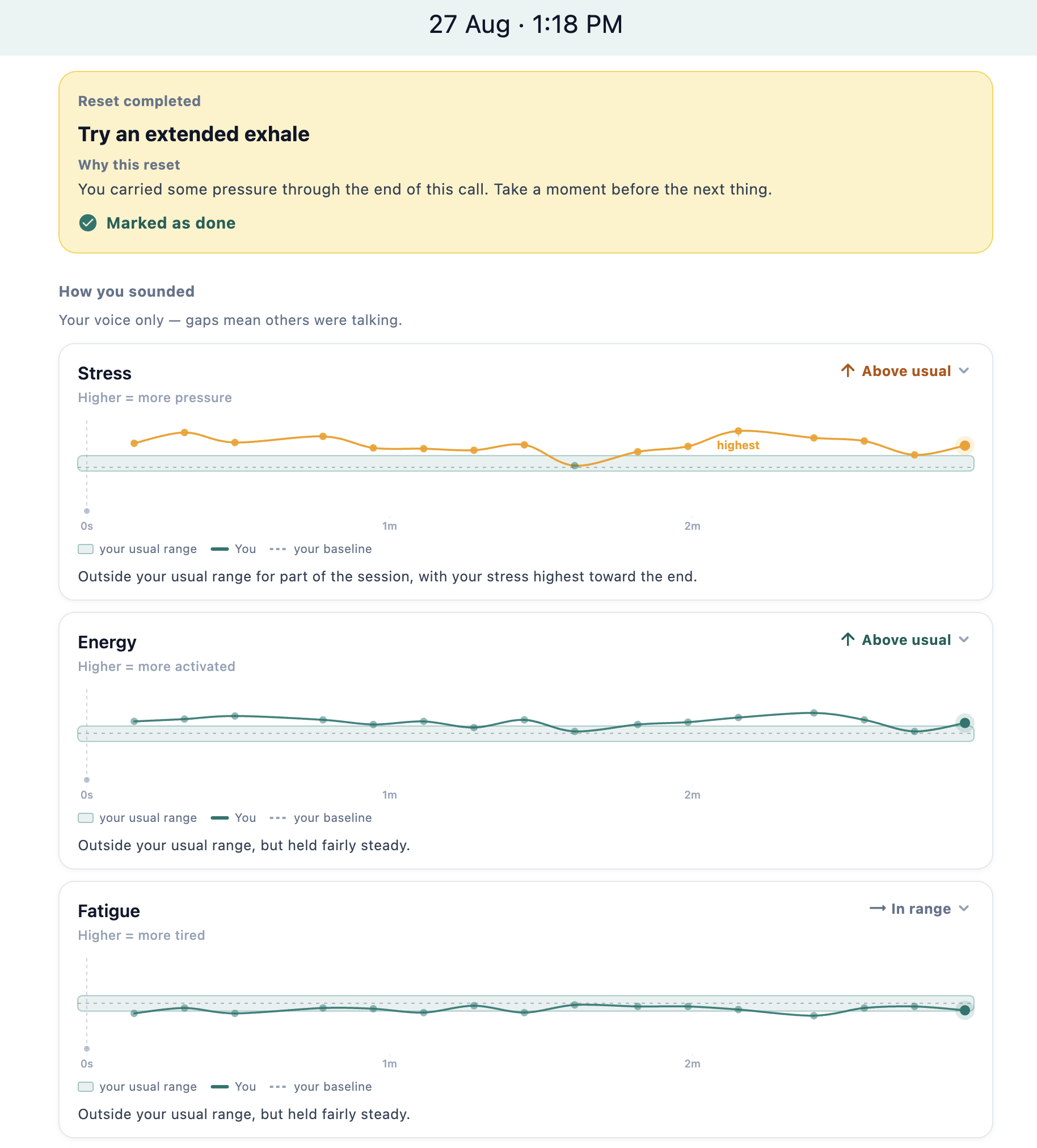
Review each signal across the session. Ontor shows when it moved outside your usual range and where the biggest shift happened.
When a shift lasts
Ontor helps you reset based on what changed.
If stress, fatigue, confidence, or breathing stays outside your usual range, Ontor suggests a short exercise. Speak again afterward to see the difference.
See what changes while you speak on a call, during a presentation, or in everyday conversation.
Stress stayed above your usual range near the end.
Ontor suggests an exercise based on what changed.
Extended exhale
Breathe in for 4 seconds, then breathe out slowly for 8.
Compare check-ins
Help your team stay sharp, too.
Give each person feedback and short resets they can use during the workday. Team leaders see aggregate patterns to inform workload, coaching, and support. Individual readings and sessions stay personal.
See how Ontor can help you stay sharp.
See what your voice shows14 days free. No card required. Cancel anytime.